


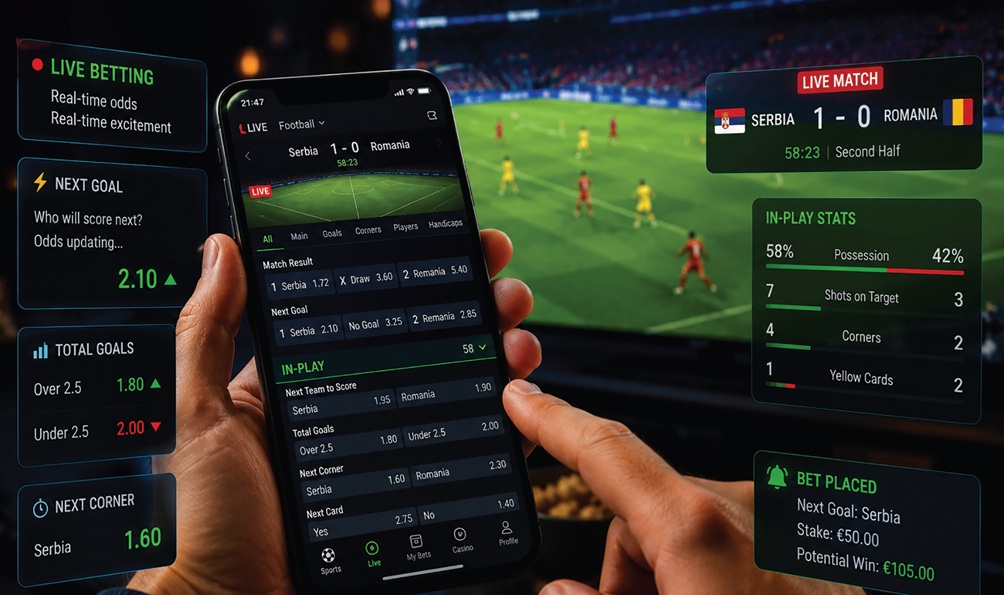
Micro-betting and live wagering are transforming Eastern Europe’s sports betting landscape, driving engagement, innovation and growth. By Marko Mitevski
Over the last ten years, the sports betting sector in Eastern Europe has changed beyond recognition. It started out as a very basic and limited activity, mainly featuring bets on the final outcome of the game. Though, the industry has since been transformed into a complex digital entertainment platform that is capable of running in real time. Among the major factors behind this change are micro-betting and live betting. These two innovations have altered the betting landscape at its core and are a great example of how technology can redefine the relationship between fan and sports through gambling.
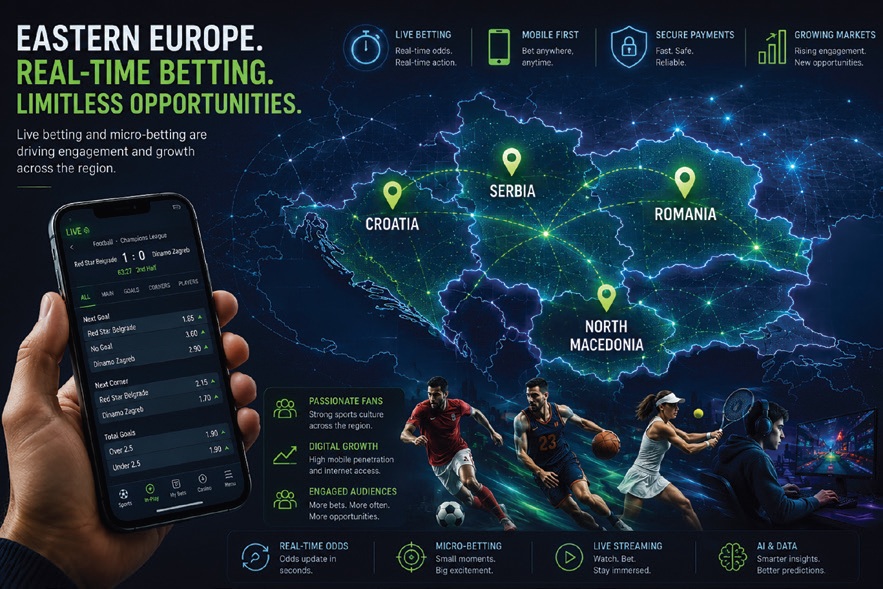
In fact, micro-betting and live betting have become extremely popular in many parts of Eastern Europe. Serbia, Croatia, Romania, and North Macedonia are some of the countries where people are increasingly opening online sportsbook accounts and using mobile devices for betting during a game. This change has been accompanied by proliferation of smartphones, secure payment mechanisms, and a growing willingness to enjoy interactive sports entertainment.
Nowadays, both micro-betting and live betting are mainstream activities. They are also very popular among the younger generation who demand instant gratification and wish to have a continuous interaction. In the eyes of the operators, these offerings mean an opportunity for greater customer loyalty and revenue, while the bettors see them as a form of sports entertainment that is more engaging and absorbing.
Understanding Live Betting and Micro-Betting
To appreciate these developments, one has to first get the difference between live and micro betting. Live betting, or in-play betting, is a concept that lets players place bets on the progress of a sports event as it is happening. Since the odds are updated all the time according to what is going on in the field, court, or track, the bettors can truly react to the in-game developments and fine-tune their strategies.
Take for instance a football supporter who tunes into a UEFA Champions League game and after watching the first 20 minutes of play, he or she decides to place a bet on the team that will score next. Same thing, a basketball enthusiast might decide to cheer for the side that has fallen behind at the beginning but seems to be coming back strong.
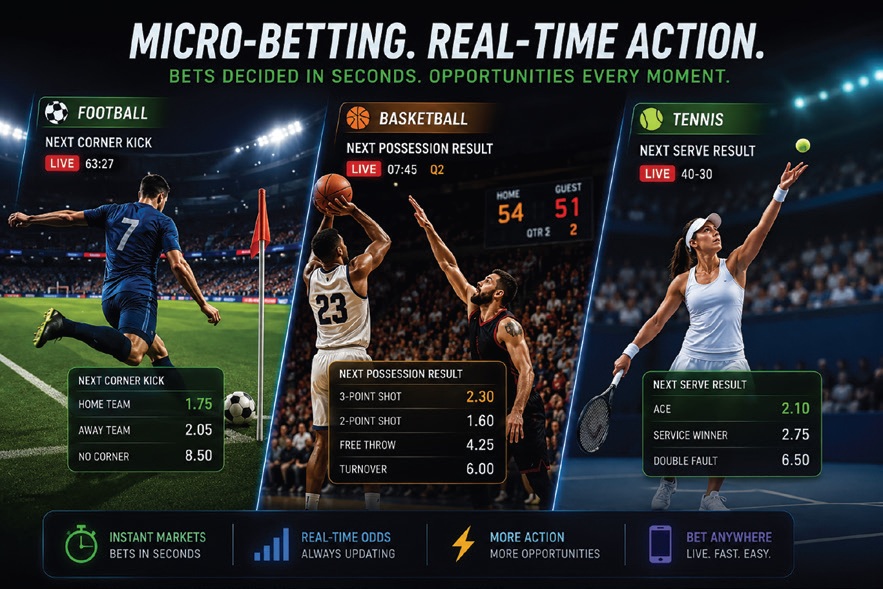
Micro-betting is basically doing the same thing but to an even greater extent. Instead of betting on the final result of a match, micro-betting deals with the very precise elements that define a very short time period. Such a wager can be decided in seconds or minutes. Examples are calling whether the next tennis serve will be an ace, whether the next basketball possession will end with a three-point shot, or whether the next football corner kick will come within the time limit set.
Simply put, micro-betting is attractive because of its quick pace. Apart from knowing that your match will no longer take hours but minutes, you get to enjoy the rapid turn-around while also being able to participate many times during the event.
The Digital Transformation of Eastern European Betting Markets
Live betting and micro-betting could not have emerged if there hadn’t been a major digital transformation in the entire Eastern Europe region. Internet penetration rates have shot up dramatically over the last 15 years throughout the region. Besides that, fast broadband and mobile internet have become so widespread that most people can access betting platforms practically anytime and anywhere.
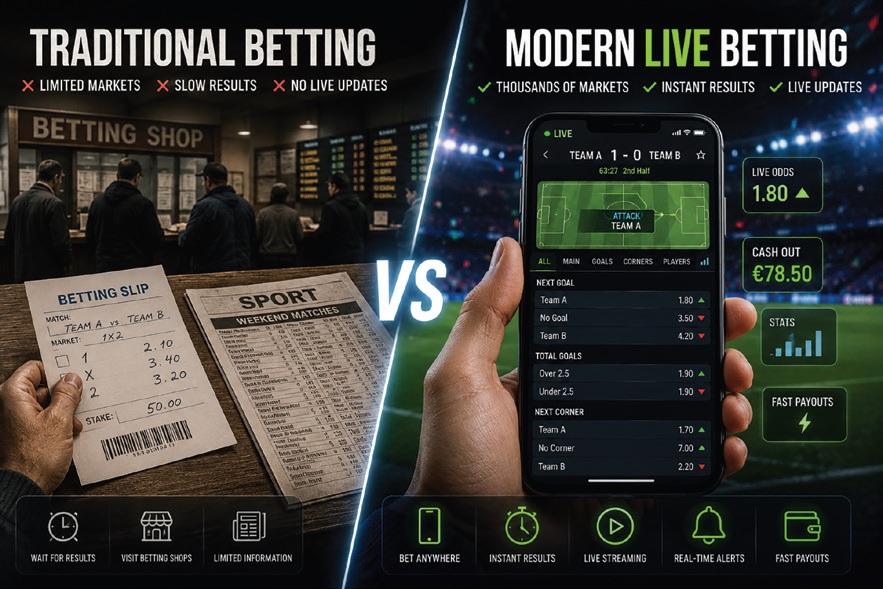
Yet, smartphone adoption has been just as significant a factor. Today’s bettors don’t need to go to a betting shop to place a bet. Mobile apps grant instant access to tens of thousands of betting markets, live statistics, streaming content, and real-time updates of odds. Eastern European sportsbooks have quite a bit invested in technology after that. Modern apps present a user-friendly interface, give personalized suggestions, allow instant deposits, and have integrated live streaming. All these features combined resulted in a fertile ground that let live and micro-betting flourish.
What has happened is a continuous move away from the traditional betting style towards an engaging and lively experience.
Why Eastern European Bettors Are Embracing Real-Time Wagering
There are several reasons why live betting and micro-betting are presently the most liked forms of betting among Eastern Europeans. One major reason is the strong sports culture in the whole region. Football remains the main sport, but basketball, tennis, volleyball, handball, and fight sports are also quite popular. Fans are so passionate about their teams that at times they know the players and their stats by heart.
Live betting allows sports enthusiasts to use their knowledge during the game. Instead of just making decisions based on the team’s strengths and weaknesses before the match, they can respond to new tactics, injuries, change of pace, and other factors that may throw the game off balance. Another reason is the enjoyment factor. Most gamblers who bet in the live betting market are looking at it as a fun part of following sports and not mainly a way of making money. Live betting makes fans get involved at a whole new level, and so they end up getting through a match with increased thrill.
Micro-betting takes the fun aspect of live betting to the next level by giving bettors even more opportunities to interact and enjoy their pastime. Every possession in the game, serve, or corner kick can be a suspenseful moment for them. The younger generation of consumers that is being brought to the market through betting is also a factor in the increasing demand for small-stake wagers. Digitally native customers expect quick responses from social media, gaming, and streaming platforms. Betting products based on traditional performance can sometimes be viewed as slow versus contemporary digital experiences.
Micro-betting is perfectly in line with these expectations because it gives quick results after the bet and ongoing interaction with the product.
Football as the Engine of Growth
Football is the main sport that leads to the growth of live and micro-betting in Eastern Europe. The format of the game lends itself very well to betting as it opens up many possibilities for placing bets during a single match. Market participants can bet on a whole range of topics like goals, corners, yellow cards, possession, shots on target, and substitutions just to name a few.
Top European clubs usually make the most volume in betting markets but the home ones also are significant. The loyalty of Eastern European fans to their domestic teams and players can also be seen in betting.
International competitions provide a lot of betting opportunities. For example, FIFA World Cup, UEFA European Championship, UEFA Champions League, and Europa League attract enormous volumes of live betting.
Since football is an extremely emotional sport the in-play betting gets particular popular. The course of the game can change so fast that for a short period of time the odds can be so different that it looks like a completely different market altogether. This is why bettors tend to believe that if they are fast enough to reacting to the on-field happenings, they will have an advantage.
Basketball and Tennis: Perfect Sports for Micro-Betting
Though football is the most popular sport on playing volume, basketball and tennis lend themselves to micro-betting even better than football does. Basketball is a high-scoring game with sudden changes of game flow. A new market can be created with each possession. The operators can present bets asking if the next basket will be a three-pointer, which team will score next, or if a player will make a free throw.
The speed of the game opened basketball the chances to players that wish to be completely engaged at all times. Tennis shares these traits. Each point, game, or set offers a new turning point that can be bet on. Modern sportsbooks give you the opportunity to bet on very specific results like a serve being an ace or the game going to deuce.
Eastern Europe has produced many great athletes in these sports which also impacts the bettors interest in them. Also, being able to place several dozen bets during one single game makes these three sports very appealing for fans of micro-betting.
Technology Behind the Revolution
The expansion of micro-betting would have been unthinkable without a huge technical leap. Believe it or not, sportsbook operators work with very advanced data providers that can transmit a split-second account of an ongoing sporting event. Thanks to this, data operators can not only change the betting odds as fast as thought, but also get the final score and settle the bets almost simultaneously.
However, to better comprehend the huge amount of data and to generate proper odds for the thousands of live markets that are open simultaneously, sportsbooks have started using artificial intelligence and machine learning. Infrastructural support enabled by cloud computing is what makes it possible for bookmaking platforms to accommodate the high influx of users that a major sporting event usually attracts. But without having scalable systems, sportsbooks would have a really hard time keeping up with the enormous number of transactions that live betting will generate.
While mobile technology has made it possible for people, it has also become a means of spreading betting opportunities. New Apps enable people to get alarmed, live streaming, statistics tracking, and betting with a few simple taps only.
The Economic Impact on the Betting Industry
Live and micro-betting are two features which have in fact been major contributors to the revenue of betting operators throughout Eastern Europe.
Traditionally, pre-match betting has been the main source of income for the industry, with most of the revenue being made before the events actually take place. After the start of the game, the chances to drum up further interest are rather limited. Live betting completely re-models this situation by offering new betting markets going on virtually every minute of the event.
It is safe to say that the opportunity to bet on a single football match can be seen almost endlessly and from time to time may even reach in the thousands. This is what leads to larger turnover, and the customers become more engaged.
Besides, operators enjoy the fact that the users are engaged for longer periods of time and they keep coming back to the platform more frequently. People who bet live markets tend to spend quite a bit more time using the sportsbook apps compared to those who do only pre-match betting. Their expansion didn’t stop the industry’s leaders from also raising capital for the purchase of technology, customer acquisition, marketing, and data services. That in turn has resulted in the betting sector in total evolving and producing jobs in many areas like software developers, customer support, etc.
For most of the licensed betting companies, live betting accounts for more than half of the total betting activity.
Regulatory Challenges and Responsibilities
The fast development of micro-betting and live betting has also brought up some major regulatory issues. Throughout Eastern Europe, governments are paying more attention to keeping betting markets fair, transparent, and secure. Regulations differ a lot from one country to another, but a lot of places are upgrading their control of online gambling businesses.
The main issue is about safeguarding consumers. Since live betting and micro-betting offer continual opportunities to bet, regulators get scared of the risk of problem gambling.
In many places, the authorities oblige the operators to put responsible gambling features like setting deposit limits, provision of self-exclusion programs, carrying out reality checks and age verification procedures. The other problem is ensuring the integrity of the sports events. The availability of very detailed betting markets may raise issues of match-fixing and corruption. Fortunately, sports authorities and betting operators are working together to track down suspicious betting and avoid threats.
Keeping up with innovation without risking consumers is still one of the major dilemmas for regulators and players in the industry.
The Psychology of Instant Engagement
The rise of micro-betting can be largely attributed to the innate human tendencies, and it is hardly surprising that this form of betting has become so popular among the people.
Traditional betting is essentially about waiting for one’s turn. The bettor places the bet and then has to wait for the event to unfold, sometimes quite a long time until the magician reveals the outcome.
Micro-betting quickly transforms this cycle of excitement and resolution to one that is in seconds long. With things happening so fast, it is easy to get trapped in an endless loop of seeing one result after the other.
This kind of on-the-spot is very much like the way things work now in our digital age. Social media notifications, video games, and short-form content platforms all rely on rapid feedback mechanisms to maintain user engagement. Rates of adoption of these strategies by sportsbooks are high. Constant updating of odds, quick agreement on the result, and custom-made tips are just some of the ways in which users are given an idea of the environment that leads to the temptation for continuous play.
It is crucial that both stakeholders, operators and regulators, grasp these psychological forces at work. Not only can greater involvement enhance the amusement factor, but it also points to the necessity for a string of responsible gambling measures.
The Influence of Esports and Digital Entertainment
The increasing popularity of esports is one of the reasons why live and micro-betting formats are gaining more attention. Eastern European countries have embraced esports extensively and the most popular titles there are Counter-Strike, Dota 2 and League of Legends. Such tournaments have even drawn many millions of spectators, not to mention the ample potential for betting in these games.
Micro-betting on esports basically means betting on small in-game events because there is a lot of action happening in the game which can be measured. For instance, one may be able to place a bet on the winner of a round, on which player made a kill, on what specific objectives were achieved, and so on. Bets on sports events have become popular among newer generations of gamers through this synthesis of betting culture and gaming culture. Interactive digital entertainment being a major part of their lives, these young consumers naturally prefer betting formats that are highly stimulating and engaging all the time.
No doubt, this blend of sports, gaming and technology will continue to be one of the driving forces for industry growth.
Future Innovations in Live Betting
The next step in the evolution of technology offers a glimpse into the future of betting that will feature sophisticated betting experiences enhanced by AI.
Artificial Intelligence may help to develop personalized betting interfaces that cater to the unique preferences and behavior of the users. Personalized market suggestions could be made to users aligned with their favorite sports, teams, and betting patterns.
Eventually, AI technologies may produce sports viewing experiences that feature betting functionalities embedded into the broadcasts.
With the employment of advanced data analytics, there could be opportunities for micro-betting at a much more detailed level. As player and team tracking technologies improve, sportsbooks may be able to offer markets based on highly detailed performance metrics.
Integration of streaming with betting features is yet another area with tremendous potential. Many operators are already providing a combination of live video with betting interfaces. This way enables users to watch the event and place the wagers within the same application. Technology keeps developing so the distinction between sports viewing and interactive entertainment will probably get even more blurry.
The Future of Eastern Europe’s Betting Landscape
There is a strong likelihood that Eastern Europe will continue being one of the most vibrant betting markets globally. This part of the world has a potent mix of factors like strong passion for sports, improving digital infrastructure, widening regulatory structures, and growing usage of smartphones. Such factors foster the perfect setting for the sustained expansion of live and micro-betting.
It is anticipated that the race among operators will intensify as businesses put their money in innovation and customer experience. Very good quality of mobile apps, streaming services, data visualization tools, and personal features might be the main factors that differentiate betting companies. Meanwhile, regulators will still make continuous efforts to adjust policies that not only protect customers but are also favorable to the growth of the industry. Such initiatives that focus on responsible gambling will probably be more sophisticated and fed with data.
The future of the market depends on how well a balance among innovation, entertainment, and consumer protection is met.
Conclusion
Micro-betting and live betting mostly changed sports betting experience in the countries of Eastern Europe. Originally, they were a mere technological innovation, but gradually, these new ways of sports wagering turned into a fundamental change of sports fans behavior. Rather than simply watching the entire game, bettors become a part of the event, as the new betting methods allow them to make a statement indicating their reaction to the game scenario.
Mobile technology, availability of data over the internet in real-time, artificial intelligence technologies, and digital infrastructure advances have all contributed to the rebirth of live and micro betting. To highlight the sports that through their nature seem to be amazing home for new betting possibilities, these would be most likely football basketball tennis, and esports, as people can pretty much bet on all actions in the game.
Operators who are still hesitant to use live and micro betting as customer retention and acquisition tools, and as a revenue generation means, should keep in mind that these are extremely powerful tools. Besides providing even greater fun and entertainment, the betting formats also offer consumers a chance to get a much more immersive experience of sports. Then again, for regulators, these new market developments are a double-edged sword that features new possibilities, but also unseen risks.
The development of live betting and micro-betting is just another indicator of the digital transformation of Eastern Europe, and because of this, the region would be the main beneficiary of these revolutionary new ways of betting. Eastern Europe will position itself at the beginning of a completely new time of sports entertainment where instant, participatory, and uninterrupted nature will be the characteristics defining the new era. Not only that, but these new ways of sports betting will also change the way people watch, follow, and experience sports.
***This original exclusive article was originally published in the June 2026 edition of Sports Betting Operator Magazine Issue 023***