


How a growing awards economy has turned industry recognition into a lucrative commercial proposition — and whether the trophy, table and sponsorship are delivering genuine value
The gaming industry’s awards calendar has become almost as crowded as its conference calendar.
For operators, suppliers, affiliates, technology companies, payment providers and consultants, there appears to be an award for almost everything.
Best sportsbook.
Best casino.
Best platform.
Best payment provider.
Best affiliate.
Best compliance company.
Best marketing campaign.
Best emerging company.
Best employer.
Best innovation.
Best executive.
And then, inevitably, there are awards for the awards.
What began as a relatively simple way of recognising outstanding achievement has become a sizeable commercial ecosystem attached to the wider events, media and exhibition business. And that raises an uncomfortable question:
How much is an award actually worth?
The exhibition industry’s profitable bolt-on
The awards business makes obvious commercial sense for event organisers. An exhibition requires substantial investment in venues, sales, marketing and production. An awards dinner can potentially monetise the same industry audience again. The commercial proposition is straightforward.
- Get companies to enter.
- Shortlist them.
- Invite them to attend.
- Sell tables.
- Sell sponsorship.
- Sell category sponsorship.
- Sell branding.
- Sell hospitality.
Then turn the winners into promotional content for the next event. A 2022 investigation by iGamingCapital quoted Pierre Lindh, co-founder of iGaming Next, describing a model in which organisers nominate large numbers of companies and then sell tables to those companies, potentially adding hundreds of delegates and another revenue stream to the wider event. That doesn’t mean every awards organiser operates this way. But it demonstrates why awards can be an attractive extension of an exhibition or conference business.
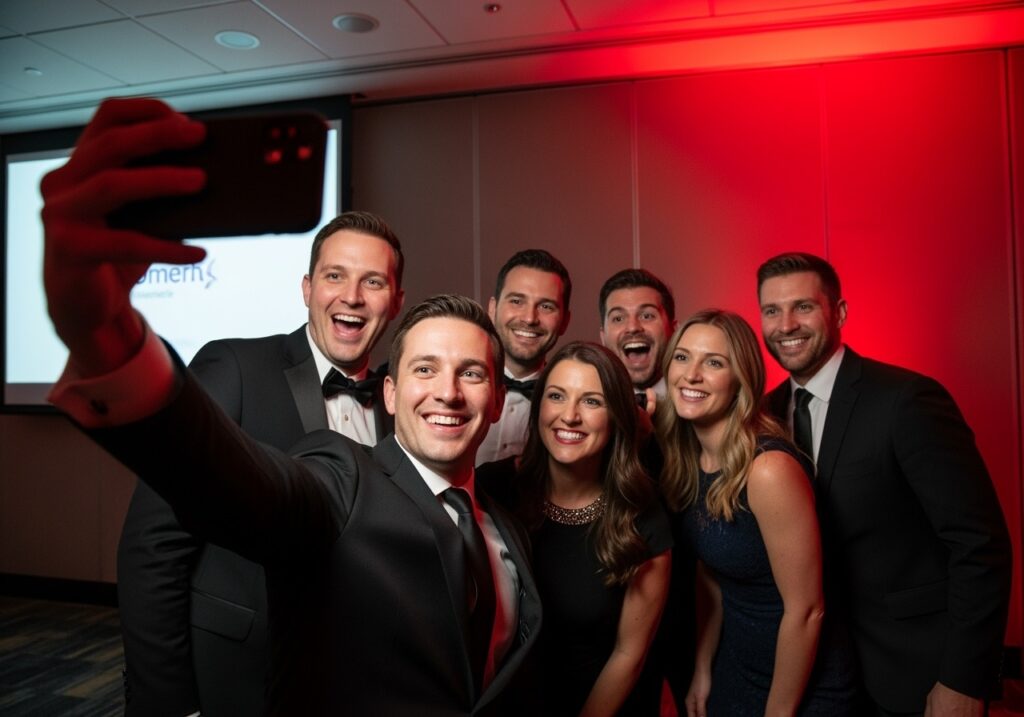
Image: Shutterstock
The table can cost thousands
The economics become clearer when you look at the price of attendance. The 2026 Global Regulatory Awards currently advertises VIP tables for up to 12 guests at £8,995, with Platinum tables at £7,995 and Gold tables at £6,995. For a supplier, that isn’t an insignificant hospitality expense. And the table is only one part of the potential spend.
There may also be:
- Award-entry preparation
- Sponsorship
- Category sponsorship
- Branding
- Travel
- Hotels
- Client entertainment
- PR
- Social media
- Additional tickets
- Exhibition participation
Suddenly, an awards evening can become a meaningful line item in a company’s annual marketing budget.
Then there is sponsorship
This is where the business model becomes particularly interesting. Those are perfectly legitimate commercial benefits. But companies should distinguish between: sponsoring an event and buying recognition. The first is normal marketing. The second would undermine the entire purpose of an award. And this is where perception becomes as important as reality.
When the sponsor is also the winner
One of the most persistent criticisms of the gaming awards business is the apparent overlap between commercial relationships and recognition. If Company A sponsors an awards category and Company A subsequently wins that category, the organiser may have a perfectly legitimate explanation. The judging may genuinely be independent. The judges may not even know who sponsored the category. The sponsor may simply have been the best submission. But to someone sitting in the audience, the optics can be very different.
Does Sponsorship win an award.
It is an easy story to tell. And once that perception takes hold, the value of the award can begin to deteriorate. The industry has discussed precisely this problem before. iGamingCapital reported claims from industry participants that sponsorship could sometimes be linked to award recognition, while other executives strongly rejected the idea that reputable awards should work that way. The important point is that the industry itself has recognised the credibility problem.
Not every award is created equal
This is where the investigation needs balance. There are awards organisations taking the judging process seriously. EGR says its B2B Awards use independent external judges, with judges required to declare conflicts of interest before judging. The Global Gaming Awards says its winners are selected by senior industry executives and that KPMG independently adjudicates the voting process. The Global Regulatory Awards similarly promotes independent expert judging, while its submission process does not charge organisations to enter. Those safeguards matter. Because the value of an award depends on one thing above everything else:
Do people believe the winner deserved it?
The Perspex problem
There is another uncomfortable reality. After all the nominations, judging, sponsorship, table sales, marketing and anticipation, the winner often walks away with a relatively inexpensive piece of acrylic or Perspex. The physical trophy itself may have little intrinsic value. But that isn’t necessarily the problem. The value of a trophy isn’t the material it is made from. The value is the endorsement behind it. A £50 piece of acrylic can be worth millions in brand credibility if the industry genuinely believes the company earned it. Conversely, a beautifully designed trophy can be almost worthless if everyone believes it was effectively purchased.
The trophy isn’t the product. The credibility is the product.
So what does the company actually get?
This is perhaps the question that marketing directors should be asking before signing the purchase order.
If a company spends £8,000 on a table, what does it expect to get back?
- Ten client meetings?
- Three sales opportunities?
- One new contract?
- Employee engagement?
- PR?
- Social media content?
- Brand awareness?
- Industry prestige?
- There is nothing wrong with any of those objectives.
But they should be measured.
An awards organiser may promise access to senior decision-makers and lead generation.
- But where is the evidence?
- How many leads did the sponsor receive?
- How many meetings were generated?
- How many became opportunities?
- How many became customers?
- What was the attributable revenue?
These are the same questions suppliers ask about exhibitions, digital advertising and sponsorships. Why shouldn’t they ask them about awards?
Operators may be buying something different
For an operator, the calculation can be more complicated. An operator doesn’t necessarily need another industry executive to know its sportsbook is successful.
But awards can provide:
Reputation.
Employer branding.
Investor communications.
Supplier relationships.
Corporate PR.
Internal recognition.
An award can also provide useful third-party content.
“Industry Award Winner” can appear on websites, presentations, recruitment campaigns and corporate communications for years.
The value therefore isn’t necessarily direct customer acquisition.
It can be reputation.
The proliferation problem
The biggest threat to the awards industry may ultimately be simple mathematics.
Too many awards reduce the value of winning an award.
If there are only five major awards, winning one is significant. If there are 100 awards, and every sizeable company can find a category in which it can be shortlisted, the trophy becomes less scarce. A 2022 iGamingCapital investigation cited industry estimates of more than 90 awards shows a year and reported concerns that the sheer number of ceremonies was diluting their value.
The industry has continued to develop specialist ceremonies since then. That creates a strange situation in which companies can simultaneously complain that there are too many awards while continuing to enter them.
Why?
Because their competitors are entering them.
The awards arms race
This may be the most important commercial dynamic.
One supplier sponsors.
Another buys a table.
A third enters ten categories.
A fourth becomes headline sponsor.
A fifth decides it needs to be shortlisted simply because its competitors are.
Nobody necessarily believes every award has enormous commercial value.
But nobody wants to be absent from the room.
The result is an awards arms race.
And that is extremely good business for the organiser.
The question organisers should answer
There is a simple test that could dramatically improve confidence in the awards industry.
Every organiser should publish:
Who judges?
How are judges selected?
Do sponsors participate in judging?
Can sponsors win sponsored categories?
Are entries free or paid?
Are shortlisted companies expected to buy tables?
Is the voting independently audited?
How many entries were received?
How many companies were shortlisted?
What percentage of sponsors were winners?
What measurable audience and networking benefits does sponsorship deliver?
There is no reason a transparent awards business should be afraid of these questions.
In fact, transparency should be a selling point.

Image: Shutterstock
The future of the awards business
The gaming industry has become increasingly sophisticated about return on investment.
Operators measure acquisition costs.
Suppliers measure leads.
Affiliates measure conversion.
Exhibitors measure meetings.
Investors measure returns.
The awards business should expect exactly the same scrutiny.
That doesn’t mean awards should disappear.
Quite the opposite.
A genuinely independent, respected award can be enormously valuable.
It can provide third-party validation that money cannot easily buy.
But the industry needs to separate recognition from hospitality, sponsorship from judging, and genuine achievement from commercial participation.
Because if the market starts believing that the winner is simply the company that spent the most money, the entire awards proposition collapses.
And perhaps that is the real question for the gaming awards industry:
Are companies buying a table, buying exposure, buying recognition — or buying an award?
The answer should be very clear.
If it isn’t, the Perspex trophy on the desk may be the least valuable thing in the room.
Preview Image: Shuttertock