



Protecting Trust in the Digital Betting Economy. An interview with Simon Baggs, Executive Chairman of Brand & Content Protection at Corsearch
As sports betting continues its rapid global expansion, operators face a growing challenge: protecting their brands, customers and reputations in an increasingly complex digital landscape. From fraudulent websites and social media impersonation to affiliate abuse, piracy and AI-generated scams, bad actors are becoming more sophisticated in the ways they exploit trusted betting brands. At the same time, major sporting events create spikes in consumer activity that provide fertile ground for fraudsters looking to capitalise on excitement and urgency.
We spoke with Simon Baggs, Executive Chairman of Brand & Content Protection at Corsearch, about the evolving threat landscape, the role of AI in online protection, and what betting operators can do to safeguard both their business and their customers.
Can you begin by telling our readers about your role and how Corsearch has evolved in recent years?
Corsearch has evolved significantly alongside the growth of the internet and digital commerce. Historically, brands primarily had to protect themselves in the physical world. Today, consumers interact with brands across websites, social media platforms, app stores, marketplaces and countless other digital channels. While this has created tremendous opportunities for businesses, it has also opened the door to a wide range of online threats.
My role focuses on helping brands tackle online infringement, fraud, counterfeiting and content abuse. At Corsearch, we use technology, particularly AI, to identify what is happening across the internet, make sense of enormous volumes of data and take action against harmful activity.
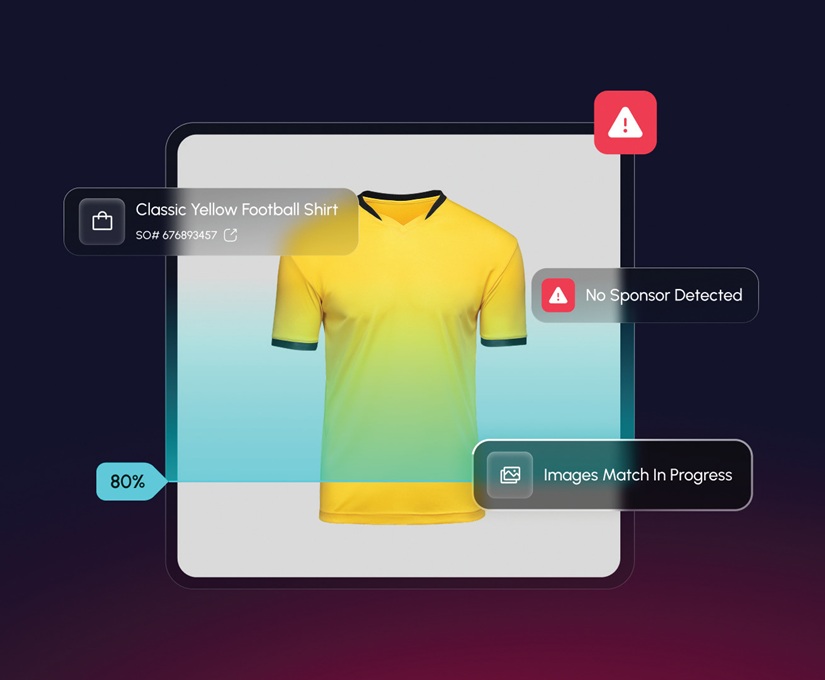
I often describe the internet as a giant shop window. Consumers browse products, services and content across platforms such as Meta, Amazon, eBay, app stores and standalone websites. If those shop windows aren’t clean and trustworthy, consumers can easily be deceived, manipulated or exposed to harm. Our job is to help keep those digital environments as safe as possible, protecting both brands and consumers in the process.
The sports betting industry continues to expand globally. What are the biggest brand protection challenges operators face today?
The biggest challenge is the scale and speed of the online environment. Sports betting has evolved dramatically from the days of the traditional bookmaker on the high street. Today, most betting activity happens online, often through mobile devices, and consumers increasingly expect fast, frictionless experiences. While that convenience is beneficial for legitimate operators, it also creates opportunities for bad actors.
Consumers may be placing bets quickly, often during live events, without giving their full attention to every detail. Fraudsters understand this. They exploit trusted betting brands by creating fake websites, impersonating social media accounts or presenting offers that appear legitimate at first glance. Major sporting tournaments amplify the problem. During high-profile events, many casual users enter the betting market for the first time. Corsearch data illustrates the scale of the challenge. During last year’s major summer sporting tournaments, enforcement actions against betting-related phishing scams increased by 118% month-on-month, highlighting how fraudsters actively exploit periods of heightened betting activity. They may not already have trusted apps installed or established betting habits. As a result, they are more vulnerable to deceptive websites and fraudulent promotions.

Image: Simon Baggs, Executive Chairman of Brand & Content Protection, Corsearch
It’s a perfect storm of heightened demand, increased consumer activity and sophisticat****ed criminal behaviour.
How serious is the threat posed by illegal betting websites and counterfeit brands?
The threat is significant, both from a consumer protection perspective and a commercial perspective. In fact, Corsearch’s analysis of 12 major international betting and gaming operators found that trademark abuse accounted for 58% of all brand infringements enforced in 2025, with copywright infringement representing a further 29%.
The most immediate concern is consumer trust and safety. If someone believes they are interacting with a legitimate operator but instead ends up on a fraudulent platform, they may lose money, expose personal information or become the victim of wider scams. However, there is also a direct commercial impact. Revenue that should be flowing to licensed operators is diverted elsewhere. In some cases, fraudulent operators are effectively building businesses by exploiting the reputation and marketing investment of legitimate brands.
Perhaps most importantly, consumers often hold the legitimate brand responsible when things go wrong. Many customers don’t distinguish between an official platform and a convincing impersonation. If they feel they have been misled, they frequently ask why the brand didn’t do more to protect them. That can create reputational damage, customer dissatisfaction and a loss of trust that takes significant effort to rebuild.
How are AI and data analytics transforming brand and content protection?
The internet is simply too large for manual monitoring. In the past, a betting operator might have been concerned with a handful of physical locations in a particular town or city. Today, there are millions of digital storefronts across websites, social media channels, app stores and other online environments.
AI enables organisations to monitor these environments at scale. It helps identify potentially harmful activity, filter out irrelevant noise and prioritise the issues that matter most. However, AI is only part of the solution. Once a potential infringement has been identified, expertise becomes critical. Intellectual property rights, trademark enforcement, copyright law and platform policies all require specialist knowledge. Organisations need experts who understand what action can be taken, how quickly it can be taken and what enforcement route is most appropriate.
The real value comes from combining technology with human expertise. AI helps find and prioritise threats, while specialists ensure those threats can be addressed effectively and removed as quickly as possible.
How can sports betting operators better protect their trademarks and digital assets?
The starting point is ensuring trademarks and other intellectual property rights are properly secured and registered. However, registration alone is not enough.
Operators need continuous visibility into how their brands are being used online. That means monitoring websites, social platforms, domains, apps and other digital channels to identify unauthorised activity as early as possible. When issues are identified, organisations need a clear response strategy. In some cases, that may involve removing infringing content or taking down fraudulent websites. In more serious cases, operators may need to pursue investigations, involve law enforcement or consider legal action against organised criminal networks. The key is moving from a reactive mindset to a proactive one.
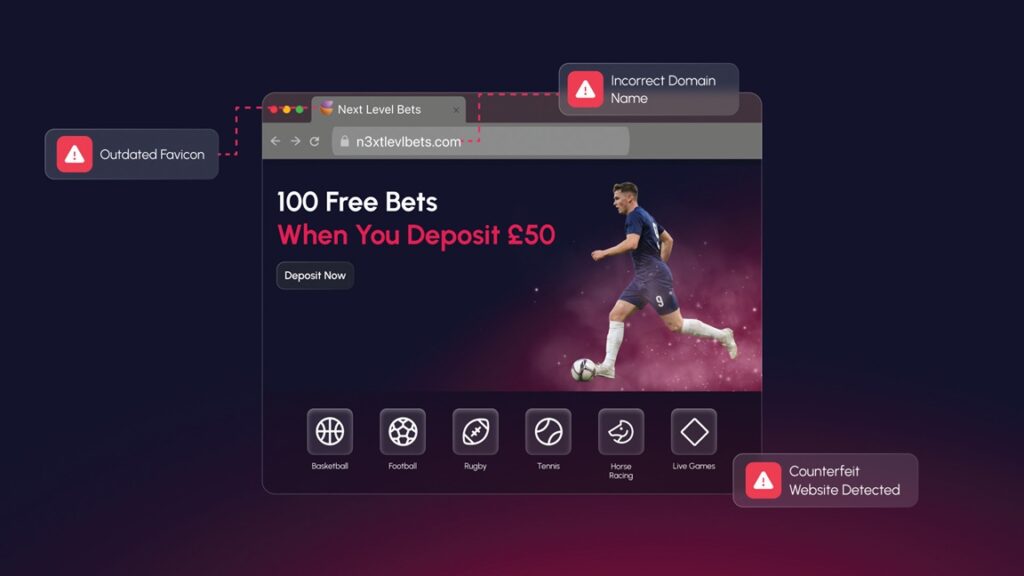
What trends are you seeing in piracy, affiliate fraud and domain abuse?
Across Corsearch’s betting and gaming enforcement activity, social platforms accounted for 51% of all actions taken, although strong platform cooperation helped deliver a 94% takedown success rate. One of the biggest trends is the increasing ease with which bad actors can create convincing online assets. Today, websites can be built and deployed in minutes. Multiple variations can be created almost instantly and scaled across different domains and channels. As a result, fraudsters can operate more quickly and efficiently than ever before. We’re also seeing growing activity across standalone websites, social media platforms and app stores, particularly during major sporting events. The challenge for operators is not simply finding individual infringements. It’s identifying patterns, understanding how abuse networks operate and responding quickly enough to minimise consumer exposure.
Technology is essential because the volume of activity is simply too large for manual monitoring alone.
How important is proactive brand protection when entering new markets?
It is extremely important. When entering any new market, businesses naturally want to understand who their competitors are, how the market operates and what risks may exist. The same principle applies online. Operators need visibility into who is already using similar branding, whether unauthorised activity is taking place and how their intellectual property could be exploited once they launch. The earlier organisations gain that visibility, the better positioned they are to protect themselves and their customers. Brand protection should not be viewed as something that happens after launch. It should form part of the market entry strategy from the outset.
What role does online brand protection play in safeguarding player trust?
Trust is fundamental to the betting industry. Licensed operators invest heavily in responsible gambling measures, compliance programmes and customer protections. Those safeguards are designed to help consumers engage responsibly and safely. The problem arises when bad actors misuse trusted brands to attract customers to unauthorised platforms that lack those same protections. Consumers who believe they are engaging with a legitimate operator may unknowingly expose themselves to greater financial risks, weaker safeguards and fewer avenues for support. Strong brand protection therefore supports more than revenue and reputation. It also helps reinforce responsible gambling commitments and protects consumers from harmful experiences.
Looking ahead, what are the biggest threats facing the betting industry?
AI-generated impersonation and deepfake technology are likely to become increasingly significant concerns. We’re already seeing examples where public figures, celebrities and trusted personalities are falsely presented as endorsing products or services. As these technologies become more sophisticated, distinguishing between genuine and fraudulent content will become increasingly difficult for consumers. For betting operators, the risk is clear. A convincing deepfake featuring a well-known sports personality or brand ambassador could be used to drive traffic towards fraudulent platforms or deceptive promotions.
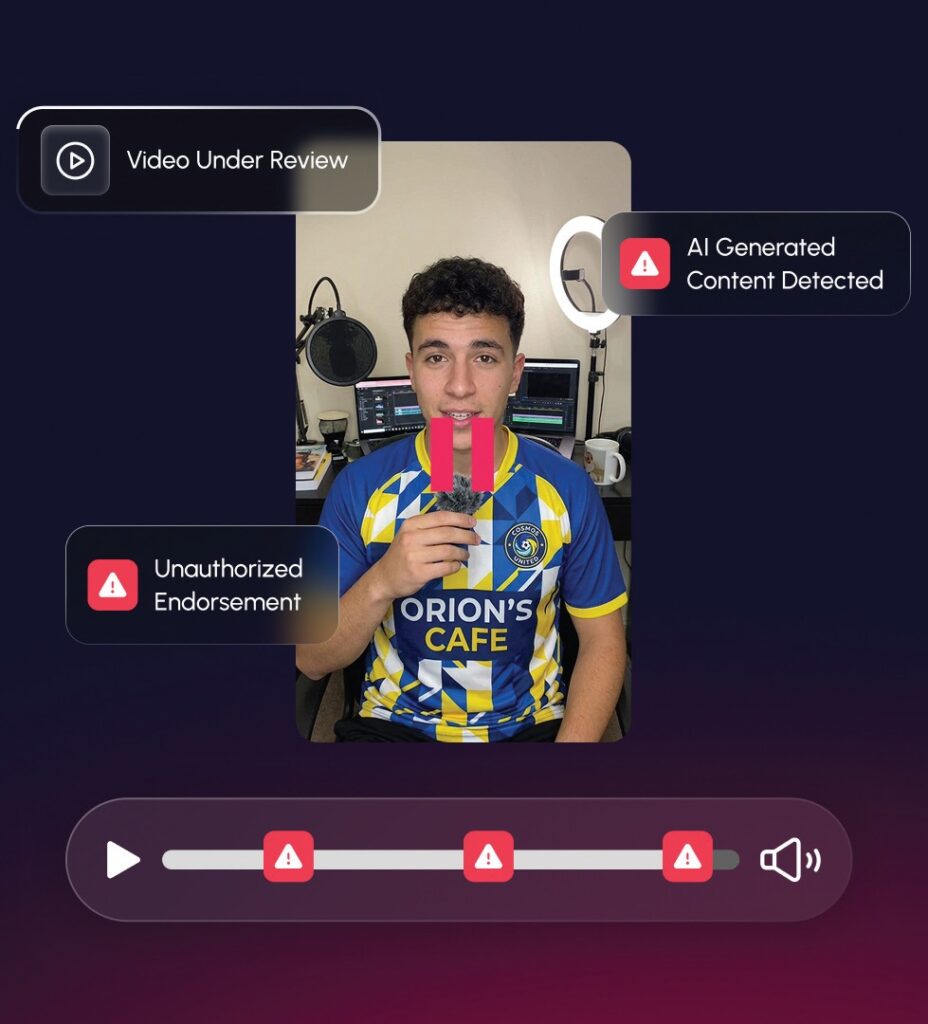
The technology will continue to improve, making proactive monitoring and rapid response capabilities even more important.
Are there any recent innovations from Corsearch that demonstrate the value of brand protection technology?
One area we’re particularly excited about is our ability to monitor video content across platforms such as TikTok and other social channels. Historically, much of online brand protection focused on websites, domains and text-based content. However, video is becoming an increasingly important channel for both legitimate marketing activity and fraudulent behaviour. Our video monitoring capabilities help identify harmful content that might otherwise go undetected. While the technology is already producing strong results in areas such as counterfeit goods, it also has significant potential to address deceptive video content, impersonation and emerging forms of fraud.
Finally, what advice would you give sports betting operators looking to strengthen their brand protection strategies?
Start with strong intellectual property foundations, but don’t stop there. Make sure your trademarks are properly protected, ensure you have visibility into how your brand is being used online and invest in the tools and expertise needed to respond quickly when issues arise. Perhaps most importantly, treat brand protection as a business-wide priority rather than solely a legal concern. Marketing teams, compliance teams, security teams and legal teams all have a role to play. The operators that are most successful in protecting their brands are those that recognise brand protection is ultimately about safeguarding trust, protecting customers and preserving long-term business value.
***This original exclusive article was originally published in the June 2026 edition of Sports Betting Operator Magazine Issue 023***