


New York’s online sports betting market experienced a sharp decline in operator revenue during June, despite bettors wagering significantly more than they did a year ago.
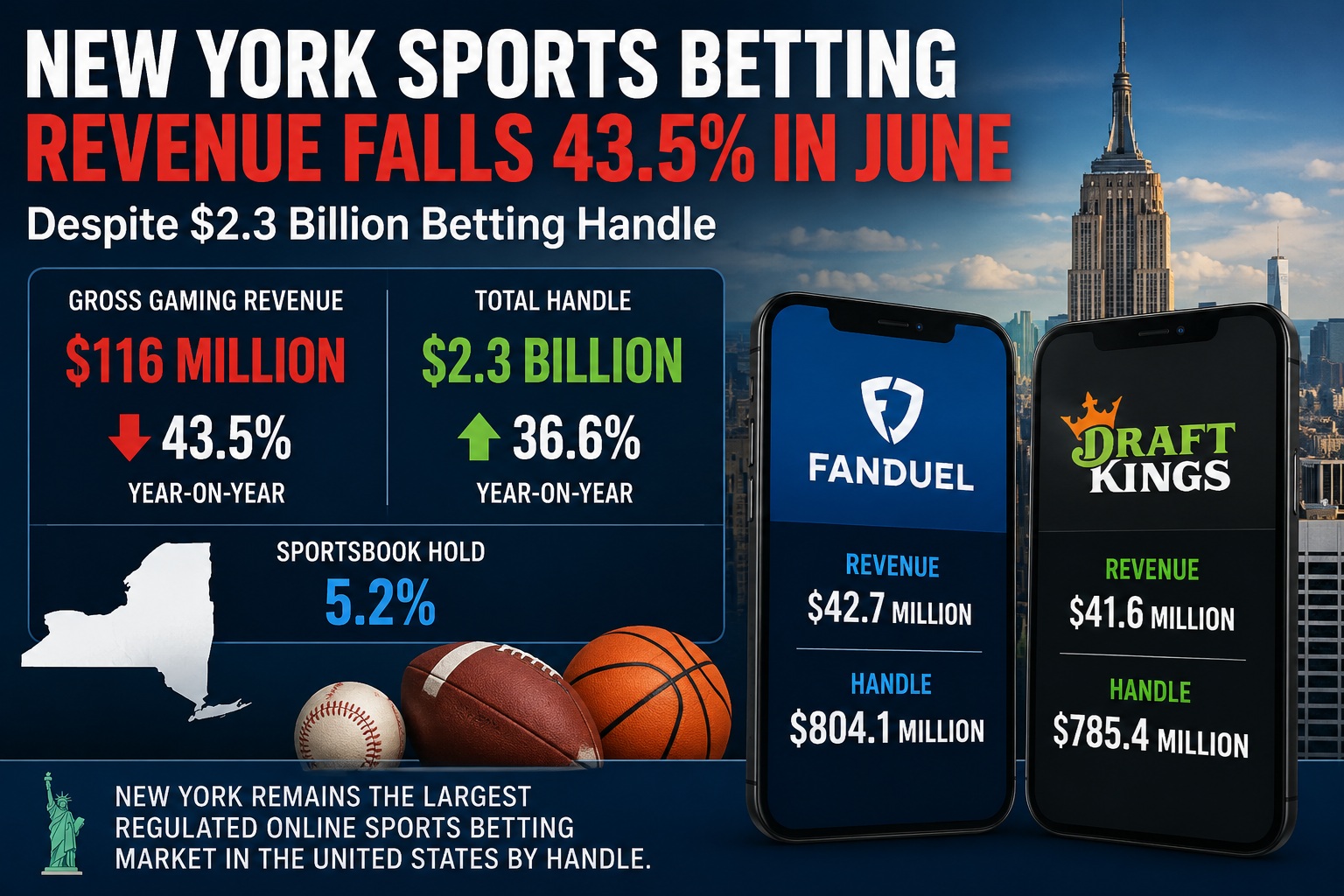
The latest figures show that New York’s licensed online sportsbooks generated US$116 million in gross gaming revenue (GGR) during June, representing a 43.5% year-on-year decline.
While operator revenue fell sharply, betting activity remained robust. Total handle reached just under US$2.3 billion, marking a 36.6% increase compared with June last year, highlighting continued consumer demand for online sports wagering in the Empire State.
The contrasting results were driven by a significantly lower sportsbook hold percentage, with operators retaining just 5.2% of total wagers, well below levels typically seen in previous months.
FanDuel and DraftKings Continue to Dominate
Market leader FanDuel retained its position as New York’s largest sportsbook, generating US$42.7 million in revenue from US$804.1 million in bets placed during the month.
Close behind, DraftKings posted US$41.6 million in revenue from US$785.4 million in handle, with the two operators once again accounting for the majority of sports betting activity in the state.
Combined, FanDuel and DraftKings processed nearly US$1.6 billion in wagers during June, underlining their continued dominance of one of the world’s largest regulated online sports betting markets.
Lower Hold Impacts Revenue
Although betting volume continued to climb, the lower hold percentage significantly reduced operator earnings.
A hold of 5.2% indicates that bettors enjoyed relatively successful outcomes during the month, leaving sportsbooks with a smaller share of wagering activity than usual.
The figures demonstrate that sportsbook profitability is influenced not only by betting volume but also by sporting results and customer win rates.
Market Remains Strong
Despite the year-on-year decline in revenue, New York continues to be the largest regulated online sports betting market in the United States by handle.
The continued growth in wagering suggests consumer engagement remains exceptionally strong, even as monthly revenue fluctuates based on operator hold and sporting outcomes.
As the sporting calendar gathers momentum later in the summer ahead of the NFL season, operators will be hoping that increased betting activity is matched by improved hold percentages to drive stronger revenue performance.