

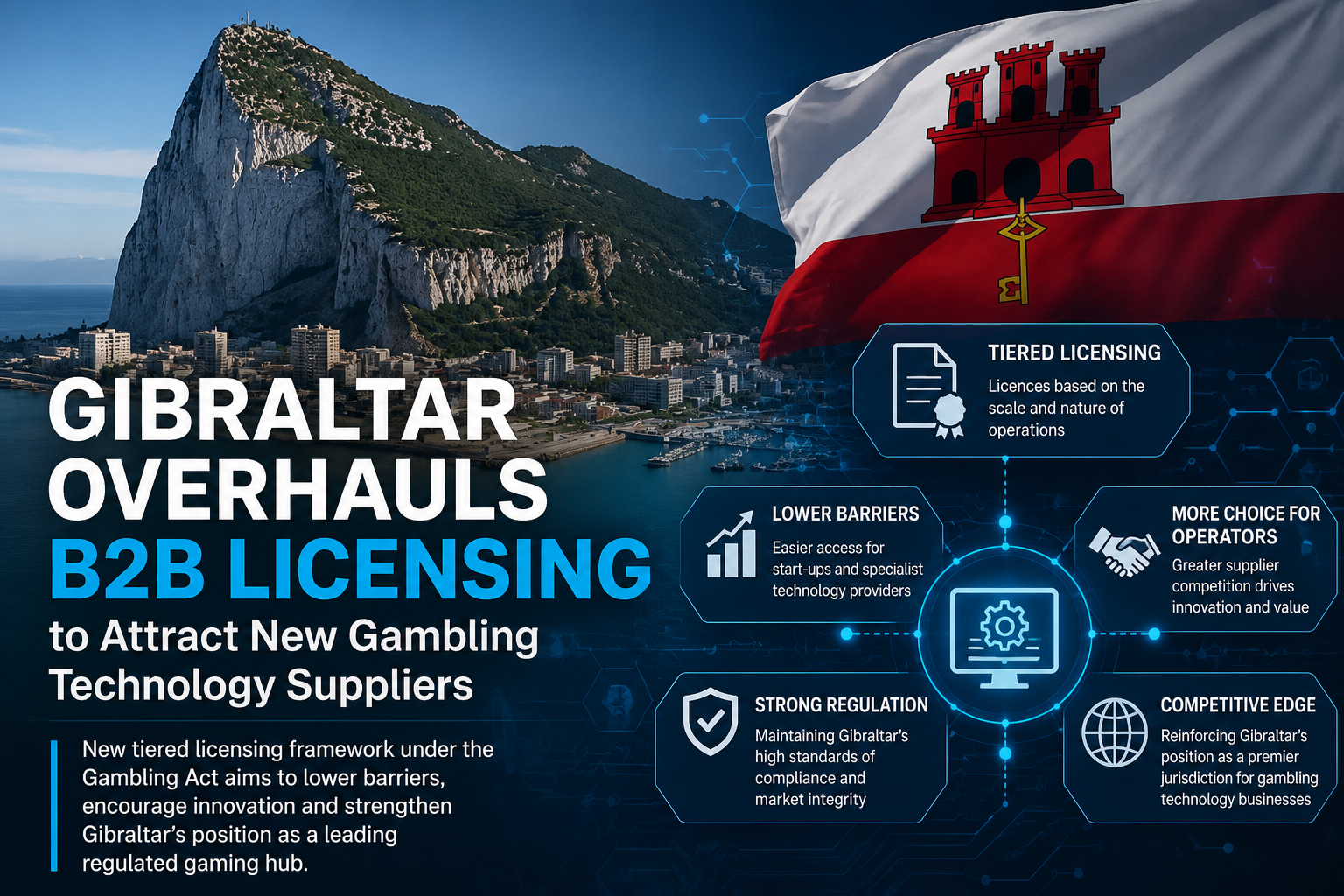
Gibraltar is set to modernise one of the gaming industry’s most established regulatory frameworks by replacing its long-standing one-size-fits-all B2B licensing model with a new tiered system designed to better reflect today’s diverse gambling technology sector.
The reforms, introduced under Gibraltar’s new Gambling Act, will allow business-to-business suppliers to apply for licences based on the scale and nature of their operations, replacing a structure that has historically treated all technology providers under the same regulatory framework.
While the changes may appear administrative on the surface, they represent a significant evolution in how one of the world’s most respected gambling jurisdictions intends to compete for the next generation of sportsbook and iGaming technology companies.
A More Flexible Approach to Licensing
The gambling technology ecosystem has changed dramatically over the past decade. Where suppliers were once dominated by a relatively small number of platform providers, today’s marketplace includes specialist businesses delivering everything from odds compilation and risk management to artificial intelligence, payments, geolocation, compliance software and customer engagement tools. Applying identical licensing requirements across such a diverse supplier base has increasingly been viewed as disproportionate, particularly for smaller businesses entering regulated markets. Gibraltar’s new tiered framework acknowledges this evolution by tailoring regulatory obligations more closely to the activities and operational scale of individual suppliers.
For start-ups and specialist technology firms, the move could reduce barriers to entry while maintaining the jurisdiction’s reputation for high regulatory standards.
Competing for the Next Generation of Suppliers
The timing of the reforms is notable. Competition between licensing jurisdictions has intensified as operators and suppliers seek regulatory certainty while navigating increasingly complex compliance requirements across global markets. Malta, the Isle of Man, Alderney and Curaçao have all updated aspects of their regulatory frameworks in recent years, recognising that attracting innovative B2B businesses has become just as important as licensing consumer-facing operators. By modernising its licensing regime, Gibraltar appears to be reinforcing its ambition to remain one of the industry’s premier regulatory hubs.
Rather than lowering standards, the reforms are designed to make regulation more proportionate, allowing businesses to comply with requirements that better reflect their level of operational risk.
What It Means for Sportsbook Operators
For sportsbook operators, the changes could ultimately translate into greater choice when selecting technology partners.
A more accessible licensing environment may encourage specialist providers to establish regulated operations in Gibraltar, increasing competition across key service areas including trading platforms, managed services, payment processing, identity verification, responsible gambling solutions and data analytics.
Greater supplier competition often drives faster innovation, improved service quality and more competitive commercial terms—benefits that operators are likely to welcome as regulatory costs continue to rise across many jurisdictions.
The reforms could also encourage closer collaboration between operators and emerging technology companies that may previously have found the cost and complexity of obtaining a full B2B licence prohibitive.
Regulation as a Competitive Advantage
The changes also reflect a broader trend reshaping the global gambling industry. Increasingly, regulation is becoming a competitive differentiator rather than simply a legal requirement.Operators and suppliers alike are placing greater emphasis on licensing credibility, compliance infrastructure and operational transparency as they expand into regulated markets. Jurisdictions capable of combining robust consumer protection with commercially attractive licensing models are likely to remain the preferred destinations for international gaming businesses.
Gibraltar’s latest reforms suggest the territory understands that maintaining its reputation requires continuous evolution rather than reliance on its established status alone.
Looking Ahead
The introduction of a tiered B2B licensing framework signals a significant shift in Gibraltar’s regulatory philosophy. Instead of applying a single model to every supplier, the new approach recognises the increasing diversity of gambling technology businesses and the need for proportionate regulation that supports both innovation and market integrity. For sportsbook operators, the long-term impact could be a stronger ecosystem of licensed technology providers capable of delivering increasingly specialised products and services within a trusted regulatory environment.
As competition between licensing jurisdictions continues to intensify, Gibraltar’s latest reforms may prove to be less about changing its rules and more about safeguarding its position as one of the world’s leading homes for regulated gambling technology businesses.